Context
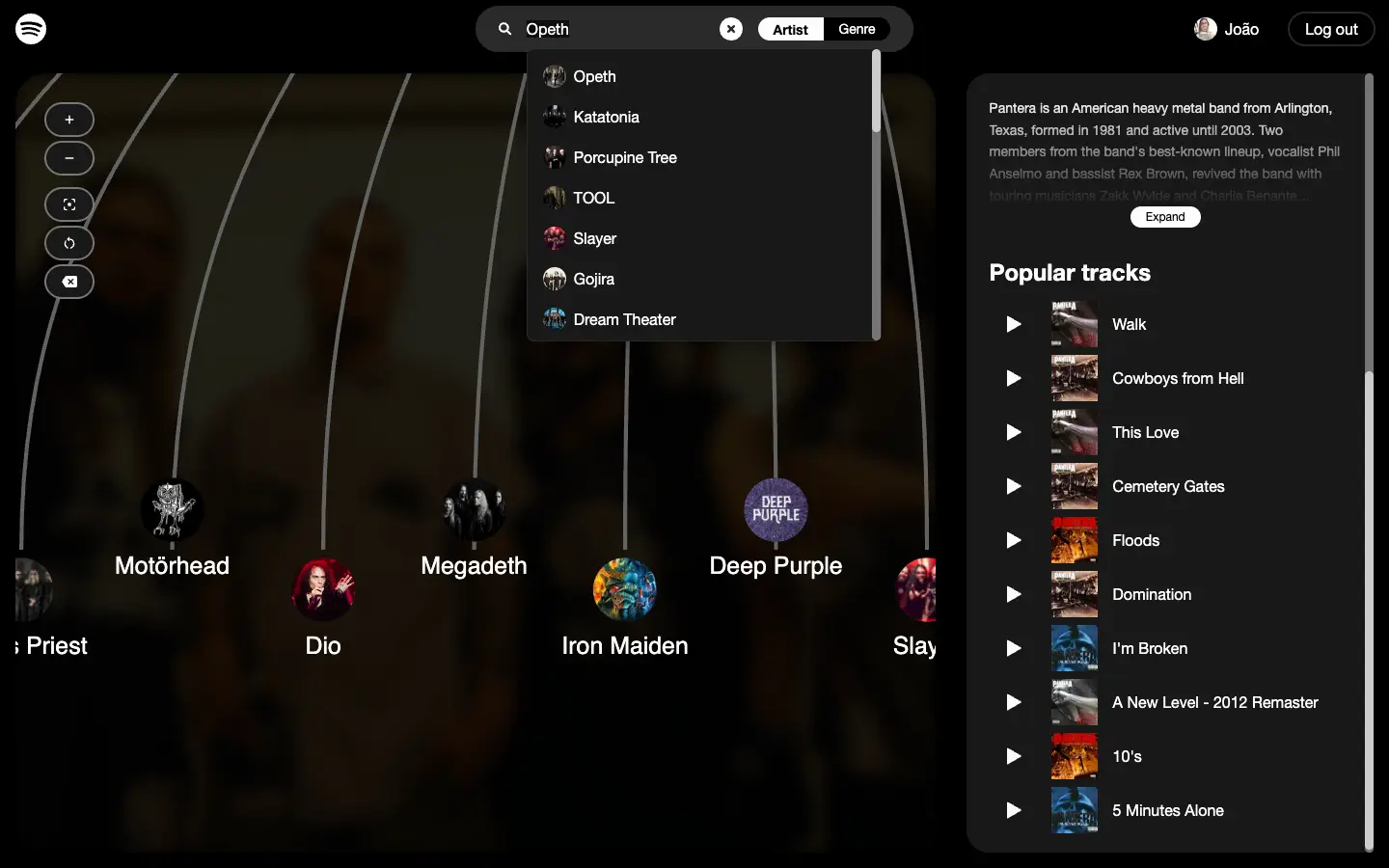
I created Raider to solve a problem I encountered while presenting a radio show. On air, I needed a quick reference for an artist’s background, popular tracks and connections to other musicians. Spotify and other streaming services made that research a page-by-page journey, just when I needed several pieces of information on one screen.
I also wanted a practical reason to learn Visx and explore how an external music API could drive an interactive data visualisation rather than another recommendation list.
Process and decisions
The first version used Spotify’s developer API. When Spotify removed access to the endpoints Raider depended on, the application lost its data source and I had to rethink the integration rather than abandon the product.
I moved artist discovery, profiles, related acts and top tracks to Last.fm, then added Deezer as a separate source for higher-quality artist imagery. Neither integration requires the person using Raider to create or connect an account.
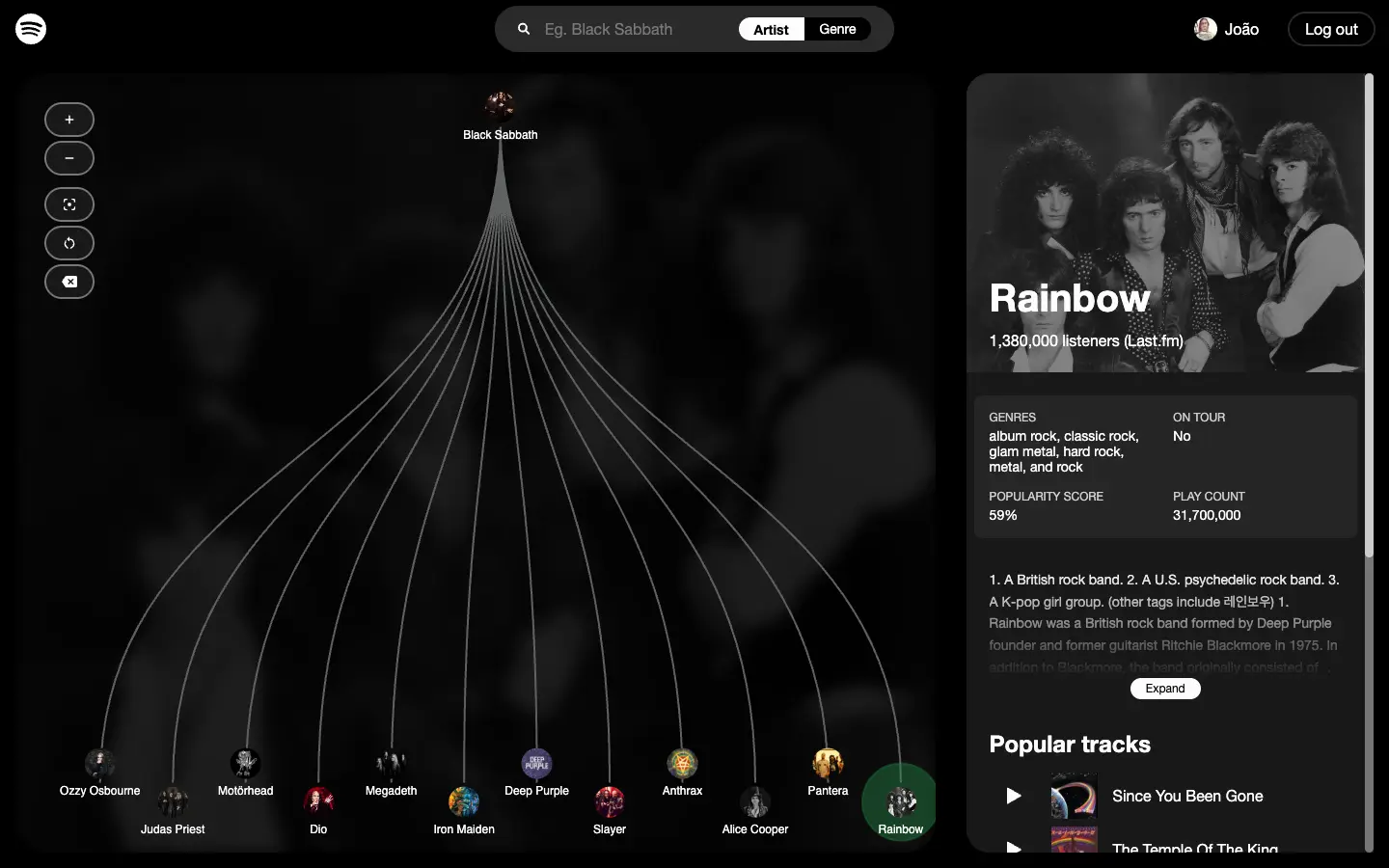
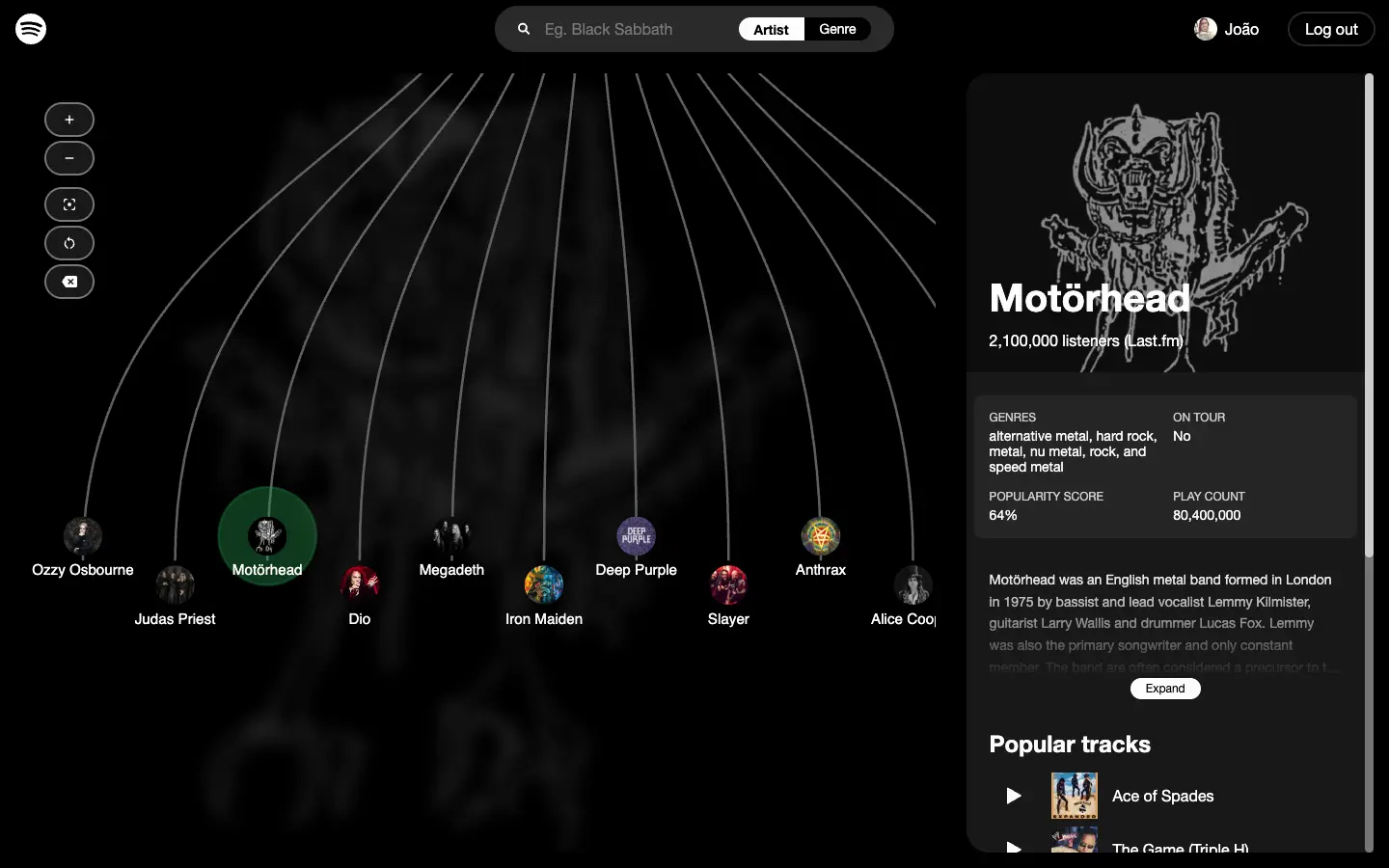
I designed search, artist detail and relationship exploration as one continuous flow. Next.js and React provide the application structure, TanStack Query manages remote data, and Zustand keeps focused interface state separate from server state. Visx turns related-artist data into an interactive, zoomable hierarchy that can be explored without opening a chain of new pages.
Accessibility and engineering
The relationship map adds another route through the information rather than becoming its only representation. Artist details, related acts and top tracks remain available as text alongside the visualisation.
Ariakit and React A11y Tools provide the interaction foundations, while Playwright and axe-core cover integration behaviour and automated accessibility checks.
Result
Raider is now a working single-page reference for searching artists, checking profiles and top tracks, and moving through related acts without third-party authentication. It serves the original on-air need while remaining an experiment in visual music discovery.
Learning
External APIs can disappear underneath a product. Keeping their responsibilities separate made the pivot possible, while the visualisation remained useful because it complemented the underlying information instead of replacing it.